


Dentists know that your online reputation is often the very first patient interaction. When your practice shines on search engines and review sites, people trust you before they ever walk through the door. Nurturing that perception not only fills chairs faster but also turns curious visitors into loyal patients.
Why Reputation Matters For Dentists

- Higher Visibility improves your Google Maps placement.
- Trust Signals from recent reviews drive more bookings.
- Competitive Edge comes when your profiles are claimed and active.
- Cost-Effective Marketing outlasts any short-lived ad campaign.
Unanswered negative feedback can reduce new patient calls by 30%.
Digital Word Of Mouth In Dentistry
Imagine every happy or unhappy patient sharing their story with dozens overnight. That ripple effect amplifies referrals and credibility, especially for smaller practices. One glowing review can feel like a flood of word-of-mouth recommendations.
Role Of Review Platforms
Profiles on Google Business Profile and Yelp are your virtual waiting room. Accurate hours and fresh photos set patient expectations—update holiday opening times to avoid no-show frustrations. Engaging with reviews also signals to search engines that your practice is active and trustworthy.
Converting Criticism Into Opportunity
A genuine apology paired with a clear solution reassures readers you’re listening. One office I worked with started answering complaints within four hours and transformed a 2-star review into a 5-star recommendation in less than a week. The result? A 20% bump in positive sentiment across platforms.
Measuring ROI Of Reputation Work
Tracking your review count, average rating and response time paints a clear picture of progress. Since 71% of patients research dental practices online before booking, every star becomes a magnet for new appointments. Learn more about dental marketing statistics.
Local SEO Signals And Reviews
Maintaining at least a 4.5-star average keeps you ahead in Google’s Snack Pack. Even one sub-par rating can push you down the list.
- Google Maps shows 81% of patient feedback in a single view.
- Yelp delivers community-driven insights.
- Healthgrades combines credentials with patient stories.
Case Example Of Turnaround
A Midwest clinic lost 20 bookings after a single 1-star rant on Yelp. They replied within two hours, offered a sincere apology and a complimentary follow-up visit. Ten days later the reviewer updated to 4 stars—and sent three friends their way.
Building Trust With Consistent Monitoring
Scanning top sites every morning prevents surprises. Set up automated alerts so your team can jump on new feedback in real time. Over time, this proactive habit cements patient confidence and fuels steady growth.
Science Behind Star Ratings
Star averages act as mental shortcuts for busy potential patients. Listings with 4.5 stars see 20% more clicks than those stuck at 4.0. That extra half-star can translate to dozens of calls each month.
Turning Stars Into Bookings
Embedding live review widgets on your website bridges the gap between feedback and action. One clinic I advised saw a 25% jump in conversion after adding recent testimonials to their homepage. Their online appointments climbed 15% within a month.
Next Steps For Your Practice
Begin by claiming every major listing and verifying your team’s details. Activate alerts in tools like Google Alerts and dedicated review aggregators. Then carve out time each week to craft thoughtful replies.
Consistent engagement beats occasional bursts in building lasting trust.
Key Takeaways
- Active review management boosts local SEO and patient confidence.
- Swift, sincere replies can turn negative experiences around.
- Monitoring Google, Yelp and Healthgrades keeps you ahead of surprises.
- Tracking simple metrics reveals clear ROI through more booked appointments.
Ready For Better Reviews
Put these tactics into practice today and watch your chair schedule tighten up. If you need help removing fake or defamatory content, LevelField.io specializes in safeguarding your star rating.
Future Trends In Dental Reputation
Video testimonials and AI-driven sentiment analysis are already on the rise. Practices optimizing reviews for voice-search queries will outpace competitors. And platforms like TikTok offer fresh ways to showcase real patient stories to a wider audience. Stay curious and adaptable—and your reputation will always be one step ahead.
Auditing Your Reputation And Setting Up Monitoring
Before you can drive more new patients through your doors, you need to know exactly where they’re finding you online. Diving into every review site—from Google My Business and Yelp to Healthgrades, Facebook and niche dental directories—paints a complete picture of your current presence.
A quick example: A Chicago practice discovered its Healthgrades page listed the wrong address and hadn’t seen a single review in months. Once corrected, appointment requests jumped by 12% in just three weeks.
Evaluating Your Listings
Start by claiming or verifying each listing so you can update hours, services and photos at will. Then focus on:
- Claim Status: Ensures you have edit rights.
- Average Star Rating: Offers an at-a-glance view of patient sentiment.
- Monthly Review Volume: Reveals trends—whether you’re gaining traction or losing momentum.
This straightforward check highlights your top priorities and provides clear metrics for team discussions. 75% of patients read online reviews before choosing a dental provider. Learn more about these trends in our detailed analysis dental marketing stats in 2024.
Setting Up Real-Time Alerts
Once you’ve mapped your listings, it’s crucial to catch every new mention. Tools like Google Alerts push notifications the moment someone talks about your practice, a specialist or a service such as Invisalign.

This snapshot shows how alerts land in your inbox with snippet previews and direct links. That instant visibility helps you address concerns before they escalate.
Monitoring Tool Comparison
To pick the right fit for your practice, weigh features and budget side by side:
Monitoring Tool Comparison
| Tool | Key Features | Cost |
|---|---|---|
| Google Alerts | Free keyword tracking, email notifications | $0 |
| ReviewTrackers | Unified dashboard, sentiment analysis, team tagging | From $49/mo |
| Mention | Multi-channel alerts, scheduled reports | From $29/mo |
| Yext Listings | Listing sync, review monitoring, analytics | From $199/mo |
Smaller practices often start with no-cost or entry-level plans. As review volume grows, upgrading to advanced dashboards can unlock richer analytics and team collaboration tools.
Automating Alerts And Response Workflows
Once you’ve chosen a monitoring solution, you’ll need to fine-tune keywords—think your practice name, lead dentist or terms like “Invisalign.” Then put clear procedures in place:
- Define roles for who monitors and who responds.
- Set an SLA to reply to negative reviews within 24 hours.
- Automate daily or weekly summary reports for leadership.
- Develop response templates that can be personalized.
- Schedule monthly audits to confirm settings remain accurate.
Practices that adopted this workflow cut their average response time by 60% in the first month—and saw satisfaction scores climb.
Immediate responses and clear ownership create a practice culture where feedback is valued and addressed, boosting trust before appointments are even booked.
For additional guidance on review templates, escalation workflows and ongoing reputation management, check out our guide on managing your online reputation at LevelField.
A reliable routine of audits and alerts lays the groundwork for turning reviews into appointments—and first-time visitors into lifelong patients.
Soliciting And Managing Patient Reviews Ethically
Nothing builds confidence faster than honest feedback from real patients. Gathering reviews the right way helps your practice shine without tripping over platform rules. Let’s dive into proven tactics, drawn from years of hands-on experience in dental offices big and small.
In Office And Digital Workflows
Your front desk team sets the tone. A friendly prompt right after treatment—“We truly appreciate your visit. Would you mind sharing your experience on Google?”—feels like a natural ask, not a sales pitch.
A quick follow-up text or email within 24 hours keeps the momentum going. Keep messages under 120 characters, mention your practice name, and include a direct link so patients don’t have to hunt for your review page.
Review Solicitation Channels
Below is an overview of the most effective ways to request reviews, along with best practices and the response rates you can expect in a typical dental practice.
| Channel | Best Practice | Expected Response Rate |
|---|---|---|
| In-Office Prompting | Front desk mentions review option in person | 40% |
| SMS Follow-Up | Send direct link via text within 24 hours | 30% |
| Email Invitations | Include multi-platform buttons in a concise message | 25% |
| Website Widgets | Embed live review feed on homepage and service pages | 20% |
Use this quick guide as a blueprint when crafting your own review outreach plan.
Monitoring Review Trends
Tracking how often and where reviews arrive tells you what’s working—and what isn’t. Set a monthly target for new feedback and display progress on a simple dashboard. Share wins in your team newsletter to keep morale high.
Automated alerts for keywords like “wait” or “billing” flag emerging issues. That way, you can address concerns before they spiral into public complaints.
“Personalized asks increased our Google review count by 100% in just 30 days.”
Using Templates And Scripts
A good template saves time but never sounds robotic. Here’s one that doubled reviews at my clinic:
“Hi [First Name], thanks for choosing BrightSmile Dental! Could you share your experience by clicking this link? Your insights help us improve care.”
Steer clear of incentives and review gating—platform policies at Google My Business (https://www.google.com/business) and other sites are clear on that. Embedding a lightweight JavaScript review widget from GMB or a trusted third-party tool can boost onsite engagement on high-traffic pages.
Measuring And Refining Your Requests
Data should drive your next move. Track which channel delivers the highest response rate and tweak your scripts based on patient feedback. In one practice, A/B testing subject lines lifted email opens by 18%.
Pay attention to sentiment trends too. Negative notes about wait times led a team to adjust their schedule and saw satisfaction scores climb within weeks.
As 77% of patients now use online reviews as their first step in choosing a dentist, prioritizing authentic feedback is non-negotiable.
Read the latest dentist review findings on amraandelma.com
Follow-Up Workflows And Metrics
Clear responsibilities mean no comment goes unaddressed. Aim to respond to negative reviews within 24 hours, and track these metrics monthly:
- Average rating
- Response time
- Review growth
Link these figures to new-patient counts to see the real ROI. One clinic cut its negative-review reply time by 50% over three months—and bookings rose by 15%.
Next Steps For Your Practice
Roll out these techniques one channel at a time and monitor impact weekly. Refine your approach based on real-world results, and never cut corners with review gating or fake stars.
For complex issues like defamatory or fake reviews, consider enlisting a professional service such as LevelField to handle takedowns at scale. That way, your team stays focused on patient care and genuine review growth.
Authentic reviews are the most sustainable path to long-term practice growth.
Responding To Negative Feedback And Fake Reviews
Negative or fake reviews call for a measured, empathetic response. You want to protect your practice’s reputation without sounding defensive. Small issues—like a 2-star note about wait times—can quickly erode trust and hurt your SEO performance.
The infographic below lays out key decision paths for gathering feedback—whether it happens in the office, over email, or via SMS.
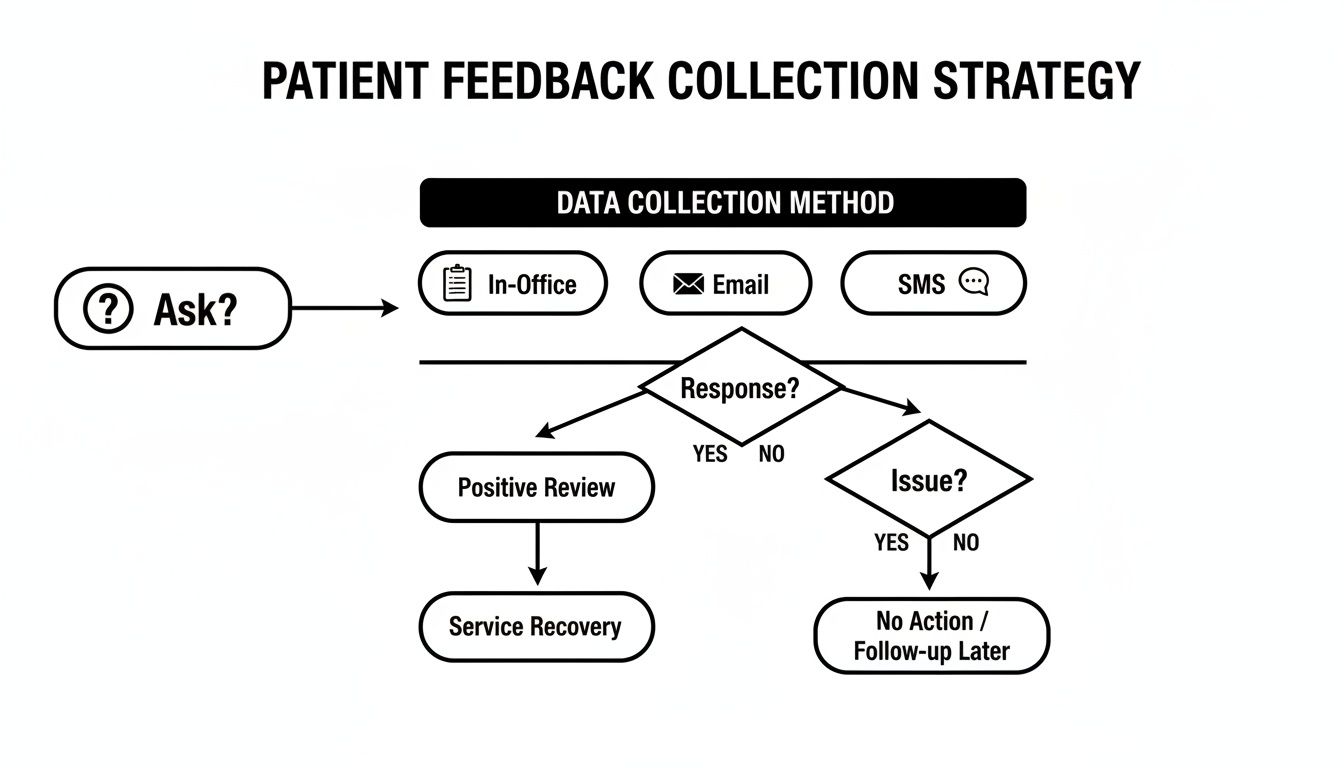
It highlights how in-office prompts capture immediate impressions, while digital channels extend your reach beyond the clinic walls.
- In-Office Prompts: Capture real-time reactions
- SMS Surveys: Reach patients on their mobile devices
- Email Feedback: Ideal for detailed comments
Practice Empathetic Responses
When you respond quickly—and with genuine concern—you signal that patient experience matters. Keep replies personal and invite a private conversation at the end.
Common Scenarios And Sample Replies
Billing Concern
“We’re sorry to hear about the billing issue. Please DM us your invoice number so we can investigate this with our billing specialist.”Long Wait Time
“We apologize for the delay. We’re reviewing our scheduling and would love to make it right. Can we offer you a priority slot next week?”Procedure Question
“Thank you for your feedback on the procedure. We’ll have Dr. Lee review your concerns and will follow up personally within 24 hours.”
Personalized responses led to a 30% reduction in repeat complaints at one clinic.
Escalation Paths For Defamation
When reviews cross the line into defamation or impersonation, follow platform-specific takedown procedures. Gather evidence first—screenshots, timestamps, IP logs—then proceed:
Google Business Profile
• Click “Flag as inappropriate” on the review
• Attach documentation of the false claimYelp
• Submit business support form with links and proofFacebook
• Use the “Report Review” dropdown and upload screenshots
If your requests stall, send a formal letter on practice letterhead:
“To Whom It May Concern,
I am Dr. Smith of SmileDental. The review posted on [date] at [link] contains false claims harming our practice. Please remove it under your defamation policy. Attached: screenshots and patient logs.”
Case Study On Review Transformation
A suburban clinic received a 2-star Yelp review over billing confusion. They replied with a sincere apology, explained charges clearly, and offered a small courtesy discount. Within two weeks, the patient updated the review to 5 stars, praising the clinic’s proactive follow-up.
Learn more about crafting effective replies by visiting our guide on How to Respond to Negative Google Reviews.
Tracking Metrics And Next Steps
Keeping an eye on the right numbers ensures you stay on track. Aim to respond to every negative review within 24 hours and remove at least 90% of fake posts.
Routine Checks
- Daily Alert Check: Scan new reviews and mark urgent issues
- Weekly Team Review: Share wins and common complaints with staff
- Monthly Audit: Verify listing accuracy and update policies
| Metric | Target | Frequency | Owner |
|---|---|---|---|
| Average Rating | 4.5+ stars | Daily | Front Desk |
| Response Time | <24 hours | Ongoing | Office Manager |
| Fake Review Removal Rate | >90% | Monthly | Admin Team |
Feeling overwhelmed? A professional ORM partner like LevelField can take over investigations, documentation, and follow-up—boasting a 95% success rate in fake-review removals.
Maintaining Professionalism In Dialogue
Keeping the tone calm and factual prevents escalation. Statements like these go a long way:
- “I understand your concern and appreciate your honesty.”
- “We value feedback and are committed to making improvements.”
- “Please allow us to address this directly and improve your experience.”
Handling Repeat Fake Attacks
Occasionally, competitors or trolls flood your profile with bogus reviews. Watch for patterns—duplicate text, rapid timestamps, strange IP addresses—and compile everything into a consolidated report for the platforms.
Consistent documentation is vital when addressing repeat fake review attacks.
Final Thoughts And Action Plan
Turning negative feedback into a growth opportunity starts with clear processes and a steady mindset. Over the next month, roll out these steps and review progress weekly:
- Reply promptly with empathy
- Document and escalate any defamation
- Track metrics to measure improvement
- Leverage professional support when needed
Celebrate each small win—boosting team morale and patient loyalty one review at a time.
Protecting Your Listings And Legal Considerations
You rely on local profiles to bring new patients through your door. But those same pages can backfire if someone slips in the wrong address or posts outdated hours.
Claiming ownership on every site—Google Business Profile, Yelp, Healthgrades and Facebook—is the easiest way to lock out unwanted edits. When these listings aren’t verified, a stray update can leave patients driving to an empty office.
Make sure your practice name is spelled exactly the same across all directories. This consistency not only cuts down on confusion but also boosts your local search visibility.
Key Listings To Claim
• Google Business Profile — Verify by postcard or phone
• Yelp Business — Request ownership through Yelp for Business
• Facebook Page — Confirm with your business email and enable two-factor authentication
• Healthgrades — Submit your practice credentials to claim the profile
Regularly curating the user-generated photo gallery keeps things fresh. Remove images of old signage or empty waiting rooms, then set a weekly reminder to scan new uploads for mislabels. That way, potential patients see a clean, professional space before they even step inside.
Updating your social channels also feeds into your online reputation management for dentists approach. Swap in current cover photos, update bios and share recent team shots. Don’t forget to link every profile back to your main website or booking page—turning casual browsers into confirmed appointments.
Secure Photo And Profile Settings
Restrict photo uploads to admin roles so no one accidentally (or maliciously) alters your galleries. Set permissions carefully and glance over access logs on a regular basis.
• Limit upload rights to admins only
• Review access logs weekly
• Remove flagged content within 24 hours
Legal Risks And Patient Privacy
If you spot a defamatory post, act fast. Capture a timestamped screenshot right away. Then:
• Gather proof of the false or misleading statement
• Check the platform’s takedown policy
• Decide whether to send a cease-and-desist letter
• Consult your legal adviser for serious harm claims
On the privacy front, HIPAA rules mean you can’t publish protected health information without a signed release. Train your team on privacy-safe review requests and keep a template release form easily accessible for patients who agree to share their story.
Quarterly Audit Workflow
A hands-on review every quarter keeps things in line:
| Task | Frequency | Owner |
|---|---|---|
| Credentials Refresh | Quarterly | IT Administrator |
| Listing Accuracy Check | Quarterly | Office Manager |
| Staff Privacy Training | Quarterly | Compliance Lead |
During each audit, rotate passwords, confirm that your address, phone number and office hours match across all platforms, and run a quick refresher with your front-desk staff on HIPAA-compliant review processes. Wrap up by updating photos, business descriptions and privacy policies, then secure your report for the next cycle.
Summary Actions
Lock down every listing, use strong passwords and remove false content without delay.
“Regular audits and legal readiness keep your digital presence sharp and protected.”
• Archive timestamped screenshots of defamation
• Save email threads with support teams
• Store copies of cease-and-desist letters
If you run into persistent fake reviews or defamation, it might be time to bring in the pros. Learn more about expert removal services at LevelField.
Combine this quarterly workflow with daily spot-checks. Schedule your next audit in three months, and set reminders for listing checks, privacy training and legal reviews. This routine builds real resilience for your practice’s online presence.
Frequently Asked Questions
How Often Should You Monitor Reviews
I’ve found that a quick morning check takes just 5–10 minutes, but really keeps you on top of new feedback. Then, set aside an hour each week for a consolidated snapshot. Finally, gather your team once a month to spot any emerging trends and discuss action items.
- 5–10 minute daily scan
- Weekly summary report
- Monthly team deep dive
How Do You Encourage Patient Feedback Under Platform Rules
Rather than blasting out generic emails, I recommend a gentle ask at checkout—then follow up via SMS within 24 hours. A casual, personal tone makes all the difference.
“One dental office I work with saw their review volume jump by 60% after adding a friendly text reminder.”
How Do You Handle Repeat Fake Attacks
Bogus reviews are frustrating, but a clear process keeps them from damaging your reputation. First, capture a screenshot with a timestamp. Next, flag the review on Google Business Profile. If it doesn’t come down, submit a formal takedown request. And if that still fails, bring in LevelField for escalation.
- Screenshot with date/time
- Flag on Google Business Profile
- File a formal takedown request
- Escalate to LevelField if needed
How Can You Measure ROI On Reputation Campaigns
ROI only tells the full story when you tie review trends to actual bookings. Build a simple dashboard that tracks monthly review counts alongside new-patient appointments. Over time, you’ll see exactly how each star bump translates into revenue.
- Change in total reviews per month
- Shift in average star rating
- Number of new inquiries traced back to reviews
What Legal Steps Should Dentists Consider
Defamation laws and HIPAA are serious business. Always consult your legal counsel before sending cease-and-desist letters. And when you respond to feedback publicly, scrub out any patient health details.
Clear documentation and a consistent workflow deliver a 95% success rate when third-party services step in.
How To Avoid Review Fatigue
Nobody wants to stare at alerts all day. Spread the workload: assign team members rotating “review shifts,” and set up automated notifications with Google Alerts or a dedicated review aggregator.
How To Sustain Ongoing Improvements
Keeping reputation management alive means making it part of your culture. Run a short training session every quarter, tie response goals to individual performance reviews, and glance at your dashboard in your monthly leadership meeting.
- Quarterly workshops on best practices
- Linking response targets to staff objectives
- Monthly dashboard reviews in team huddles
Consistency drives growth and trust in your practice’s online presence.
Use these answers as your toolkit—fine-tune them, share with your team, and watch your online reputation flourish.