

At its core, online reputation management is about driving more revenue, building unbreakable customer trust, and becoming the kind of company top talent wants to work for. It’s a game of offense, not just defense—actively shaping how people see your brand online turns your digital presence into a real, measurable asset instead of a ticking liability.
Why Your Online Reputation Is Your Most Valuable Asset

Think of your online reputation as the new first impression. It's your storefront, your handshake, and your business card all rolled into one. Before anyone even thinks about buying from you, hiring you, or partnering with you, they're going to Google you. What pops up—whether it's glowing praise, a string of angry complaints, or radio silence—instantly shapes their opinion and decides what they do next.
This is why online reputation management (ORM) is a fundamental business activity, not just a panic button for when things go wrong. It’s the daily work of listening, guiding, and managing how your brand is perceived across the entire internet. It's like tending to a garden: with consistent care, you cultivate a healthy, vibrant presence that can weather a few storms. But if you neglect it, you’ll find it quickly gets overrun by weeds you never planted.
The Bedrock of Modern Business
We operate in an economy built on digital trust, and your reputation is the foundation. Online reviews have become the ultimate shortcut for buyers. In fact, a staggering 93% of consumers say they read online reviews before making a purchase.
And consider this: 85% of consumers now trust online reviews just as much as a personal recommendation from a close friend. When you dig into the data, the importance of these review statistics becomes crystal clear—managing your reputation isn't optional.
The payoff for getting this right goes way beyond just looking good online. It directly impacts your bottom line and sets you up for long-term growth.
A smart ORM strategy turns your digital footprint from a passive record into an active advantage. It builds a deep well of goodwill that not only brings in new customers but also protects the brand when challenges pop up, making you more resilient and trustworthy.
Core Benefits of Online Reputation Management at a Glance
A well-executed ORM program delivers several key advantages that translate into real-world business results. By actively managing public perception, you can steer your company straight toward its goals. This table breaks down the core benefits and their direct impact.
| Key Benefit | Direct Business Impact | Primary Goal |
|---|---|---|
| Increased Revenue | Higher conversion rates and customer lifetime value | Drive sales and profitability |
| Enhanced Customer Trust | Improved brand loyalty and positive word-of-mouth | Build a loyal customer base |
| Talent Acquisition | Attracting high-quality job candidates | Become an employer of choice |
| Crisis Mitigation | Reduced impact of negative press or events | Protect brand equity and stability |
Ultimately, these benefits work together. A trusted brand with a great reputation naturally attracts better employees, weathers crises more effectively, and, most importantly, earns more business.
How a Strong Reputation Drives Revenue

While building trust and attracting talent are huge wins, let's be honest: one of the biggest reasons to invest in your online reputation is its direct, measurable impact on your bottom line. A strong reputation isn't just a nice-to-have metric; it's a powerful sales engine that greases the wheels at every stage of the customer journey.
Think of your brand’s reputation as a powerful amplifier for all your marketing. You can pour thousands into a brilliant ad campaign, but if a potential customer’s first Google search turns up a page of 2.5-star reviews, that investment goes right down the drain. On the flip side, a stellar 4.8-star average acts as a third-party endorsement, making every dollar you spend on marketing work that much harder.
This connection between perception and profit is undeniable. When people see a steady stream of positive feedback, it removes the hesitation that kills a sale. They feel more confident hitting "buy," walking into your store, or signing that contract, which means higher conversion rates and a shorter sales cycle.
Translating Stars into Sales
The data tells a clear story: those little yellow stars have a massive influence on where customers spend their money. Even a small jump, like going from a 3-star to a 4-star rating, can dramatically boost consumer trust and their willingness to buy. Why? Because high ratings are the ultimate form of social proof, signaling that you’re a safe and reliable choice.
Put yourself in a customer's shoes. You're comparing two similar products. One has mixed reviews, the other has page after page of glowing feedback. The choice is obvious. This effect creates what’s known as a reputation premium—trusted brands don't just win more customers, they can often charge more without scaring people away.
A well-managed online reputation does more than just attract new business; it creates a financial buffer. By consistently delivering a positive experience and showcasing it online, you build a loyal customer base that is less price-sensitive and more likely to return.
At LevelField, we see this in action every single day. Our deep knowledge of platform policies and enforcement allows us to target and remove fraudulent negative reviews that are unfairly dragging down a client's rating. When we get a company’s score back to where it rightfully should be, it’s not just a morale boost—it immediately restores their competitive edge and unlocks revenue that was being choked off by false information.
The Financial Value of a Protected Brand
Protecting your reputation isn’t just about winning the next sale; it's about safeguarding your company's entire financial health and long-term value. A clean digital footprint makes your brand far more attractive to investors, partners, and even potential buyers. It’s a clear signal of stability, customer loyalty, and a well-run ship.
This isn't just theory. The World Economic Forum found that companies with strong reputations can add up to 25% to their market valuation. That premium reflects the confidence investors have in the brand's resilience and future growth. You can dig into more numbers in this report on reputation management statistics.
This is where our confidential workflow at LevelField produces such tangible results. We discreetly handle the investigation and removal of everything from misleading ads to counterfeit product listings that dilute brand equity. By cleaning up the digital noise, we help our clients protect their pricing integrity, stop revenue leakage, and ultimately fortify their financial standing. A cleaner reputation isn't just good PR—it leads directly to a healthier, more profitable business.
Building Unbreakable Customer Trust and Loyalty
In today's market, trust is everything. It's the invisible currency that convinces a new customer to choose you over a competitor, and it's earned one interaction at a time. Every review, comment, and social media mention is a public testament to your brand's character, and managing this conversation is one of the most powerful benefits of reputation management.
Think of it as a digital handshake. When you actively engage with what people are saying online, you're not just reacting to feedback—you're showing up. You're proving that there are real, caring humans behind the logo, and that's what turns a simple transaction into a lasting relationship.
Turning Feedback into a Foundation of Credibility
It's tempting to focus only on the five-star reviews, but true credibility is built in how you handle the entire spectrum of customer feedback. A simple "thank you" on a positive review makes a happy customer feel appreciated and seen. But it's your response to criticism that really shows your mettle.
When you address a negative review head-on—publicly, professionally, and with a genuine desire to make things right—you send a powerful message. You're telling every potential customer watching that you stand by your promises and take accountability. That kind of transparency doesn't just solve one person's problem; it builds a bedrock of trust that can even convert a frustrated customer into one of your biggest fans.
By consistently shaping your online story, you cultivate an environment where loyalty isn't just possible—it's natural. Each thoughtful response is a building block of social proof, reassuring new customers that they're in safe hands.
This is where a strategic approach is critical. At LevelField, we bring deep expertise in platform policies to the table. We know how to distinguish legitimate customer concerns from fake reviews or bad-faith attacks. Our confidential workflow allows us to work with platforms to enforce their own rules, ensuring the public conversation about your business is a fair one and protecting the trust you've earned.
From First-Time Buyers to Lifelong Supporters
Customer loyalty isn't a one-and-done deal. It’s the outcome of a continuous cycle of positive experiences. A great online reputation attracts new customers, who then have a great experience with your business, prompting them to leave their own positive feedback. This, in turn, draws in even more people.
This self-perpetuating loop is how you transform one-time buyers into repeat customers and, ultimately, into brand advocates who do your marketing for you. Here’s how you can actively foster that loyalty:
- Show You're Listening: When you reply to reviews, you're confirming that customer voices matter.
- Solve Problems Publicly: Fixing an issue out in the open demonstrates your commitment to service for everyone to see.
- Celebrate Your Advocates: Share positive testimonials and user-generated content to make your happy customers feel like valued partners.
A key part of strengthening this cycle is making it easier for satisfied customers to share their stories. If you want to amplify your brand's credibility, you can learn how to encourage customers to leave more reviews and build more powerful social proof.
In the end, this isn't just about managing perceptions. It's about building real, resilient relationships that drive your business forward for years to come.
Winning the War for Top Talent

Long before a top candidate ever reads your job description, they’ve already started their own investigation. They’re scrolling through Glassdoor, checking comments on LinkedIn, and digging deep to find out what people really think about working for you. This kind of digital due diligence is the new normal, and it has completely changed the hiring game.
Your online reputation isn’t just a problem for the marketing department anymore; it's now a cornerstone of your recruitment strategy. A steady stream of negative reviews talking about a toxic culture or incompetent management can stop your hiring efforts dead in their tracks, no matter how great the salary is. Why? Because your employer brand is on display for the world to see, 24/7.
This is where reputation management makes a tangible difference. It’s all about making sure the story being told online actually matches the positive, supportive workplace you’ve worked so hard to build.
Your Reputation Is Your Best Recruiter
In a tight job market, the best candidates have options. They’re vetting you just as carefully as you’re vetting them. A strong, positive online reputation acts like a magnet, pulling in the best and brightest without you having to spend a fortune on headhunters.
When potential hires see glowing testimonials about your company culture, leadership, and opportunities for growth, you build trust before the first interview. They walk into the process already excited about the chance to join your team, giving you a serious edge over competitors who've let their employer brand slide.
Today’s top professionals aren't just looking for a paycheck; they're looking for a great place to build a career. A well-managed online reputation is the ultimate social proof that your company is one of those places.
The stakes here are incredibly high. Consider that 68% of professionals admit they won't even apply to a company with a poor reputation. That means a few bad reviews can shrink your potential talent pool by more than two-thirds before you even post the job opening. You can find more data on how online reviews shape professional decisions in this insightful report.
A Proactive Strategy for Attracting Talent
Building a five-star employer brand isn't an accident; it requires a focused strategy that meets candidates where they are. A smart, proactive approach involves a few key moves:
- Monitoring Employer Review Sites: Keep a close eye on platforms like Glassdoor and Indeed to get a real-time pulse on employee sentiment.
- Engaging with Feedback: Make a point to respond professionally to all reviews, both positive and negative. It shows you're listening and that you value what your team has to say.
- Showcasing Your Culture: Don't just tell people you have a great culture—show them. Share stories, videos, and team testimonials on social media that bring your workplace to life.
At LevelField, our work often involves protecting a company's employer brand from unfair attacks. We combine our deep knowledge of platform policies with a confidential workflow to identify and challenge fake or defamatory employee reviews that misrepresent the truth. By ensuring the online conversation about your company is fair and accurate, we help you build a reputation that attracts the talent you need to win.
Mitigating Risk and Preventing a Crisis
Think of a strong online reputation as your company's first line of defense. It’s not about being invincible; it’s about building a deep reservoir of goodwill that acts as a buffer when—not if—something goes wrong. I like to call it a "reputational shield."
Without that shield, a single viral complaint, a misleading news story, or even a coordinated attack from a competitor can completely derail your business. But when you’ve already built that foundation of trust, a negative event becomes an outlier, not the defining story of your brand. It’s the difference between a small crack in a solid wall versus one that brings the whole structure down.
Proactive reputation management is all about playing the long game. It means putting monitoring systems in place that act like an early-warning alarm, letting you spot potential fires while they’re still just sparks.
From Small Sparks to Raging Fires
It happens all the time. A minor customer service issue goes unanswered and quickly escalates into a public relations nightmare. An ignored negative review sends a clear signal to everyone else: this company doesn’t care.
That perception has a real cost. Failing to reply to online reviews can increase customer churn by up to 15%. This isn't just about hurt feelings; it's a direct hit to your bottom line. Since 89% of customers now read how a business responds to reviews before they buy, your engagement—or your silence—is a very public performance.
A proactive strategy doesn't just build your brand; it insulates it from the inevitable turbulence of the digital world. Detecting and addressing issues early is the key to preventing a manageable problem from becoming a catastrophic one.
This is where a professional, structured approach is so critical. For instance, you need to understand the nuances of platform policies to tell the difference between legitimate criticism and a bad-faith attack designed to do harm. At LevelField, our team uses a confidential workflow to investigate these issues and act on policy violations, keeping that reputational shield strong. If you want to dive deeper into what professional help looks like, our guide to reputation management consulting is a great place to start.
Building Your Digital Fortress
A solid risk mitigation plan goes way beyond just watching review sites. It’s about securing your entire digital perimeter against the different kinds of threats that can damage your brand and confuse your customers.
This means actively hunting for and shutting down issues like:
- Impersonation Accounts: Fake social media profiles or websites masquerading as your brand.
- Counterfeit Listings: Unauthorized sellers on e-commerce marketplaces undercutting your price and diluting your brand’s value.
- Misleading Advertisements: Competitors or scammers using your company name in deceptive ads to siphon off traffic.
Taking these proactive steps, like implementing robust online brand protection strategies, directly protects your revenue streams from counterfeiters and trademark abuse. By truly taking control of your narrative everywhere online, you build a fortress that not only attracts customers but also repels threats, ensuring your brand stays healthy for the long haul.
How Reputation Management Plays Out in Different Fields
The basic ideas behind managing an online reputation apply everywhere, but how you put them into practice changes dramatically depending on your industry. A cookie-cutter strategy just doesn't work. The risks, the platforms that matter, and what your customers expect are completely different for a law firm than they are for an online store.
To see real results from reputation management, you have to get specific. What builds trust for a patient looking for a new doctor is a world away from what gets a shopper to add an item to their cart. It’s not just a nice idea to tailor your approach; it's the only way to make a real impact.
Think of a strong, positive online presence as a "reputation shield." By building up goodwill and spotting trouble early, you soften the blow when a crisis inevitably hits.
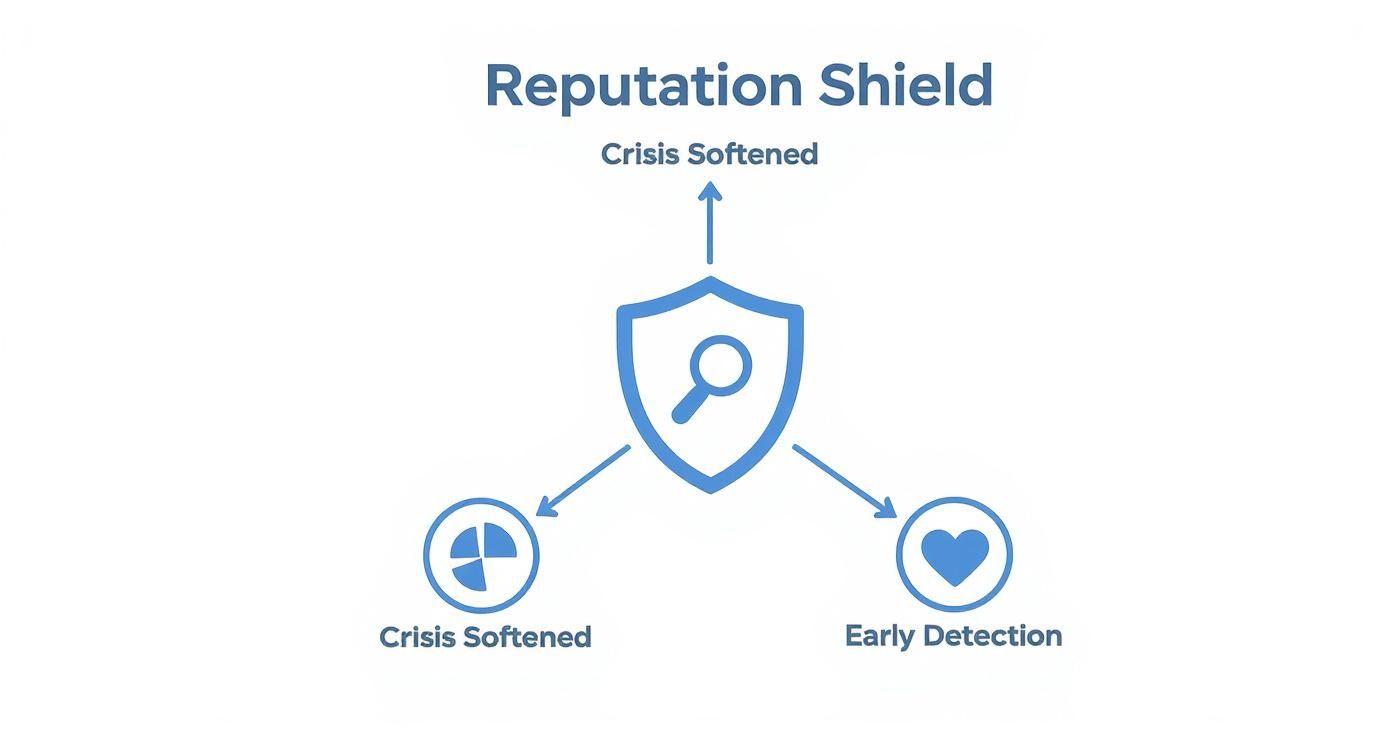
This consistent effort creates a valuable asset, making your business far more resilient when something unexpected goes wrong.
The High-Stakes World of Healthcare
In healthcare, reputation and trust are one and the same. When potential patients are feeling vulnerable, the first place they go is online. They aren’t just browsing; they’re intensely vetting doctors and clinics on sites like Healthgrades, Vitals, and Google.
A bad review isn't just about a long wait time; it can imply a lack of competence or even raise concerns about patient safety. On the flip side, a steady stream of positive feedback about compassionate care and good outcomes is powerful proof that directly influences whether someone picks up the phone to book an appointment.
Every online review in healthcare is a public story about the quality of care. Managing this dialogue isn't just marketing—it’s a core function that shows a commitment to patient well-being and protects professional credibility.
Building Credibility for Legal Professionals
For an attorney, credibility is the currency of the realm. Clients are often in the middle of a life-changing crisis and need to feel absolute confidence in their legal counsel. Before they even think about a consultation, they’re digging into reviews and profiles on platforms like Avvo, Martindale-Hubbell, and Google.
They're looking for proof of expertise, professionalism, and a history of winning cases. A single false or defamatory review—whether from a bitter opponent or a shady competitor—can cause serious damage by casting doubt on a lawyer's integrity.
A focused ORM strategy for a law firm involves:
- Showcasing Expertise: Actively promoting positive case results and client testimonials to build a powerful public record.
- Managing Client Feedback: Responding to all reviews with complete professionalism while staying within strict ethical guidelines.
- Correcting the Record: Quickly and effectively challenging false claims that could tarnish a hard-earned reputation.
This ensures a firm’s online footprint accurately mirrors its real-world skill and dedication.
Driving Sales in E-Commerce
Nowhere is the line between reputation and revenue clearer than in e-commerce. Product reviews and seller ratings on marketplaces like Amazon, Etsy, and eBay are everything. A high star rating can send your product soaring to the top of search results, while a drop of even half a star can make your sales disappear overnight.
The digital shelf is incredibly crowded, and shoppers make split-second decisions based on the experiences of others. A 4.5-star rating signals a safe bet, while a 3.5-star rating sends buyers running to a competitor.
This makes online sellers a huge target for fake negative reviews and counterfeit product listings that steal sales and erode brand trust. For these businesses, a robust ORM plan is a matter of survival, which is why many seek professional online reputation management for small business to defend their digital storefronts. Here, the return on investment is counted in daily sales figures.
ORM Strategy by Industry
The right strategy depends entirely on the arena you're competing in. Here's a quick comparison of how different industries need to approach their online reputation.
| Industry | Primary ORM Goal | Key Platforms to Monitor | Critical Success Factor |
|---|---|---|---|
| Healthcare | Build patient trust and confidence | Healthgrades, Vitals, Zocdoc, Google | Demonstrating compassionate care and expertise |
| Legal | Establish credibility and authority | Avvo, Martindale-Hubbell, Lawyers.com | Highlighting successful outcomes and client satisfaction |
| E-Commerce | Drive sales and protect brand integrity | Amazon, eBay, Etsy, social media | Maintaining high star ratings and combating fake reviews |
As you can see, while the goal is always a positive reputation, the path to achieving it is unique for each sector. What works for a surgeon won't work for a Shopify store owner.
Frequently Asked Questions
It's natural to have a few questions, even when the benefits are clear. Let's tackle some of the most common ones so you can move forward with a solid plan.
How Long Does It Take to See Results?
You'll see some wins almost right away. For instance, the moment you start actively responding to new reviews, you signal to everyone—past, present, and future customers—that you're listening and you care. That can provide an immediate lift in trust.
But the bigger, more foundational changes take time. Shifting your average star rating or nudging a negative result off the first page of Google is a marathon, not a sprint. Real, lasting change usually takes several months of consistent, focused effort. Consistency is truly the key to building a reputation that doesn't just look good, but actually works for your business day in and day out.
Can I Just Handle My Reputation Myself?
Absolutely, a DIY approach can work—if you have the time, the right tools, and a good bit of know-how. But be prepared: properly managing your reputation can feel like a full-time job. It's not just about checking reviews; it's about monitoring social media, forums, and blogs, all while responding thoughtfully and strategically.
This is where bringing in a professional team makes a difference. An agency comes equipped with specialized software, years of experience with platform policies, and the dedicated manpower to get the job done right. It frees you up to do what you do best: run your business.
Is It Actually Possible to Remove a Bad Review?
This is the big one, isn't it? The short answer is: sometimes. Platforms won't remove a review just because it’s negative. They see genuine customer feedback (even the harsh stuff) as a core part of their service.
However, you can absolutely get a review taken down if it breaks the platform’s rules. The most common violations include:
- Fake or Spam: Reviews from bots, competitors, or people who were never customers.
- Defamatory Content: Comments that include false statements presented as fact that damage your business.
- Harassment or Hate Speech: Abusive language, personal attacks, or content that targets protected groups.
Getting these reviews removed requires a sharp understanding of each site's specific terms of service and a well-documented case for why the review is a violation. It’s more of a legal argument than a simple request.